Turtle and Reptile Care at Home: Why Good Husbandry Prevents Most Illness


Most of the sick reptiles I see did not catch a bug or have bad luck. Their trouble started with the setup. Turtles, tortoises, lizards, and snakes are finely tuned to their environment, and when the heat, lighting, humidity, or diet is even a little off, their health slowly follows. This is the single most important idea in reptile care, and it is good news, because it means most reptile illness is preventable. Getting the husbandry right is the real work, and a home visit lets me look at your reptile and its actual habitat at the same time.
I am Dr. Colleen Roman of AnimALL Mobile Veterinary Service, and reptiles are one of my favorite parts of exotic practice. Here is how I approach turtle and reptile care, and why so much of it happens around the enclosure rather than the exam table.
Quick answers
- The large majority of pet reptile health problems trace back to husbandry, not infection.
- The four pillars of reptile husbandry are temperature, UVB lighting, humidity, and diet.
- An in-home visit lets me assess your reptile and inspect the real enclosure, which is where most answers actually live.
Why is husbandry the most important part of reptile care?
Husbandry is the most important part of reptile care because most reptile illness is caused by the environment, not by germs. The Merck Veterinary Manual describes metabolic bone disease as one of the most common disorders in captive reptiles, and it is largely preventable with correct diet and lighting. When I treat a reptile, fixing the habitat is usually as important as anything I can prescribe.
Reptiles are also masters at hiding illness, much like other exotic pets. A tortoise or gecko can be quietly declining for weeks while still moving around the enclosure. That combination, subtle symptoms and an environment that shapes health day by day, is exactly why a husbandry-focused approach protects reptiles better than waiting for something to go visibly wrong.
What are the four pillars of reptile husbandry?
The four pillars of reptile husbandry are temperature, UVB lighting, humidity, and diet. Getting all four right for your specific species prevents the majority of the problems I see, and getting any one of them wrong can undermine the others.
Temperature and the thermal gradient
Reptiles are ectotherms, which means they rely on their surroundings to regulate body temperature. A proper enclosure offers a gradient, a warm basking zone at one end and a cooler zone at the other, so your reptile can move between them to run its own thermostat. When temperatures are too low, digestion and immune function slow down, and a reptile that cannot warm up properly becomes vulnerable to a range of illnesses. Reliable thermometers at both ends of the enclosure are some of the most valuable tools a reptile keeper can own.
UVB lighting
Most pet reptiles need UVB light to make vitamin D3, which they must have to absorb calcium properly. Without adequate UVB, a reptile cannot use the calcium in its diet, and that shortfall is a leading path to metabolic bone disease, a painful and deforming condition. UVB bulbs also lose output long before they burn out, so they need replacing on a schedule, commonly around every six to twelve months depending on the product. Checking your lighting is one of the first things I do on a reptile visit.
Humidity
Humidity needs vary widely by species, and matching your reptile's natural climate matters more than most people expect. A humidity level that is fine for a bearded dragon can be far too dry for a rainforest species, and the wrong level shows up as trouble shedding, skin problems, or respiratory issues. A simple hygrometer, plus species-appropriate misting or substrate choices, goes a long way.
Diet and calcium
Diet is where reptile care gets very species-specific, and calcium balance sits at the center of it. Herbivores such as most tortoises need high-fiber, calcium-rich plants, omnivores such as box turtles need a varied mix, and carnivores such as snakes need whole prey. For insect eaters, the feeder insects should be gut-loaded and dusted with calcium and vitamin D3 so the reptile actually gets the minerals it needs. A poor calcium-to-phosphorus balance is one of the most common diet mistakes I correct.
What does good turtle and tortoise care look like at home?
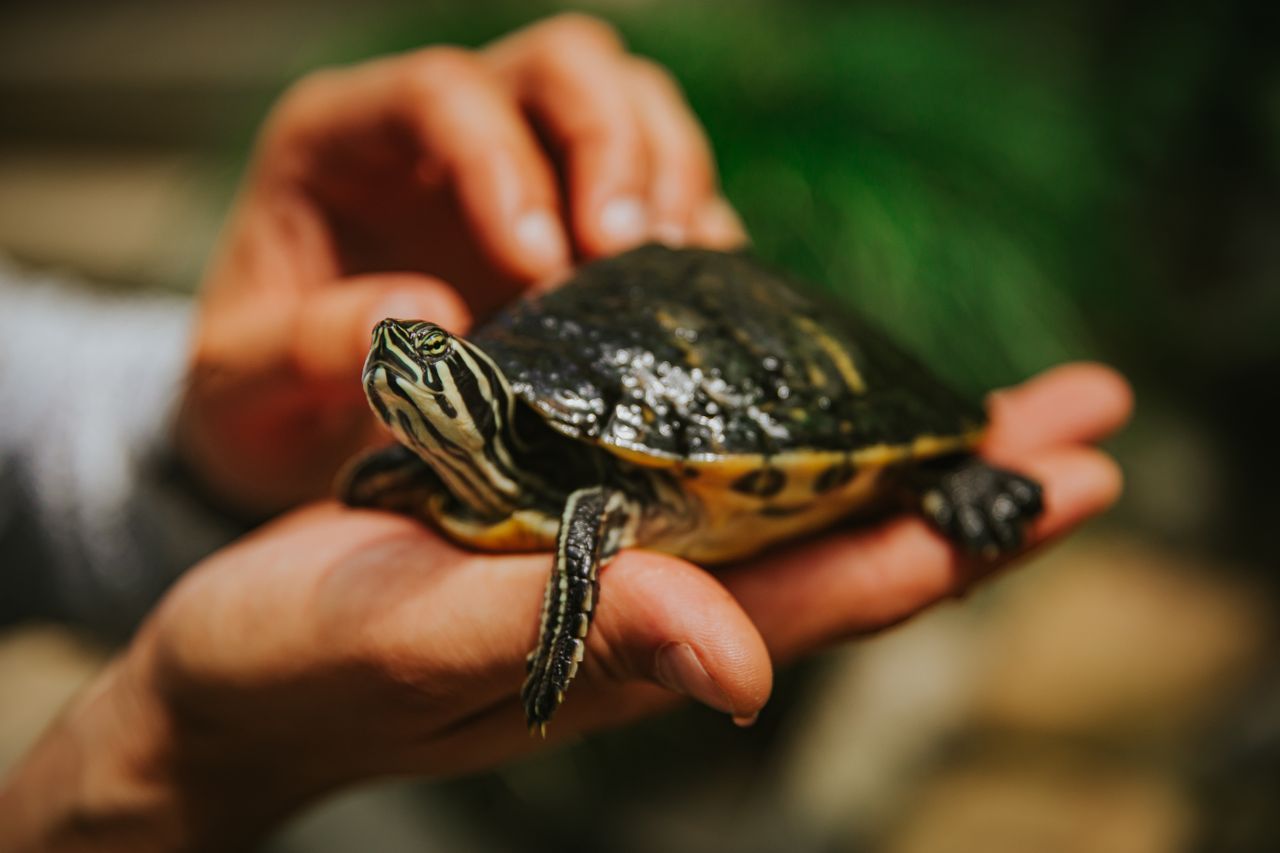
Good turtle and tortoise care means matching the setup to whether your animal is aquatic, semi-aquatic, or terrestrial, because their needs are quite different. Aquatic turtles depend on clean, well-filtered water along with a dry basking spot and UVB, since poor water quality and weak lighting are frequent sources of shell and skin problems. Tortoises need space, a high-fiber diet, proper hydration, and appropriate warmth and UVB to keep their shells and bones strong.
The shell itself is a useful window into husbandry. Softening, pyramiding, or discoloration often reflect longstanding issues with diet, lighting, or humidity rather than a sudden illness. When I examine a turtle or tortoise at home, I read the shell and body condition together with the enclosure to understand the whole picture.
What are early signs my reptile's setup needs attention?
Early signs that a reptile's husbandry needs attention include reduced appetite, low energy, trouble shedding, a soft or swollen jaw, swelling of the limbs, and any change in how the animal holds or moves its body. Softening of the jaw or shell and swollen limbs can point toward metabolic bone disease, which is worth addressing promptly before it progresses.
These signs are reasons to book a wellness and husbandry visit, not to wait and see. If your reptile is ever in genuine distress, such as severe breathing difficulty, collapse, a serious injury, or a prolapse, that is an emergency and belongs at a full-service or emergency veterinary hospital right away. For the slow, husbandry-driven problems that make up most of reptile medicine, an in-home wellness visit is the right tool.
How does an in-home reptile wellness and husbandry visit work?
An in-home reptile visit combines a physical exam with a full review of the habitat and diet, which is why doing it at your home is so useful. I examine your reptile using calm, low-stress handling, then look at the enclosure directly: the temperatures at each end, the UVB setup and bulb age, the humidity, the substrate, and the feeding routine. If diagnostics are warranted, many can be done in the home, including sample collection and bloodwork, so we can look under the surface without a stressful hospital trip.
Reptiles are also sensitive to temperature swings during transport, so seeing them in their own controlled environment is genuinely better for them. You come away with a written plan for any changes to heat, lighting, humidity, or diet, and a clear sense of what to watch for going forward.
Interested in learning more?
You can explore our exotic pet medicine services, learn more about mobile vet care for exotic pets, and read why families choose a mobile veterinarian. We care for reptiles across North Metro Atlanta, including Alpharetta, Buford, Cumming, Duluth, Dunwoody, Johns Creek, Lawrenceville, Peachtree Corners, Roswell, Sugar Hill, and Suwanee.
Frequently asked questions
How often should reptiles see a vet?
Most reptiles should have a wellness exam at least once a year, even when they seem healthy. Reptiles hide illness well, and an annual visit lets me catch husbandry problems and early disease before they become serious.
How do I know if my reptile has metabolic bone disease?
Possible signs of metabolic bone disease include a soft or swollen jaw, softening of the shell in turtles, swollen or bowed limbs, trembling, and weakness. It is caused mainly by inadequate calcium, vitamin D3, or UVB lighting, and it should be evaluated by a veterinarian, since early cases are much easier to manage.
How often should I replace my reptile's UVB bulb?
UVB bulbs lose output before they stop producing visible light, so most need replacing roughly every six to twelve months depending on the product. Replacing them on schedule helps prevent the calcium problems that lead to metabolic bone disease.
Do you see turtles, tortoises, snakes, and lizards at home?
Yes. AnimALL Mobile Veterinary Service provides in-home wellness, husbandry counseling, and diagnostics for turtles, tortoises, snakes, lizards, and other reptiles across North Metro Atlanta.
Can good husbandry really prevent most reptile illness?
Yes. Because the majority of reptile health problems stem from the environment rather than infection, correct temperature, UVB, humidity, and diet prevent a large share of the illnesses reptiles develop in captivity.
Getting the setup right is the best medicine
With reptiles, the enclosure is not just where your pet lives, it is a large part of its health. Match the temperature, UVB, humidity, and diet to your species, and you prevent most of the problems that send turtles, tortoises, lizards, and snakes to the vet in the first place. If you would like an in-home reptile wellness exam or a husbandry review for your reptile in North Metro Atlanta, our team is glad to help. You can reach out to AnimALL Mobile Veterinary Service or call us at (770) 766-4858.